
So, let’s all try to fix the problem.
“Fame has it that you, Fidentinus, recite my books to the crowd as if none other than your own. If you’re willing that they be called mine, I’ll send you the poems for free. If you want them to be called yours, buy this one, so that they won’t be mine.” — Appearance and Authorship, Peter Anderson
Nothing beats reading hot gossip that’s 2000 years old about a tiff between two Roman poets, Martial and Fidentinus. There is some juicy tea I could go into, but I have other things to talk about so I’ll let you read that in your own time.
My point with this intro is simple: Plagiarism isn’t new.
And if you look up the etymology of the word, it actually comes from the Latin root word “plagiare” which used to only refer to “kidnapping.” Because you know — you’re stealing someone else’s idea.
Today, it’s still a massive problem that usually doesn’t result in any justice for the person being plagiarized. Obvious plagiarism, like directly copying someone else’s work, is easy to spot. We all know that’s wrong because they drill it into our brains as 8-year-olds at school.
But there are other kinds of plagiarism that all of us have engaged in at some point — myself included — at least until we learn to do better. So, hey, why not learn something new today?
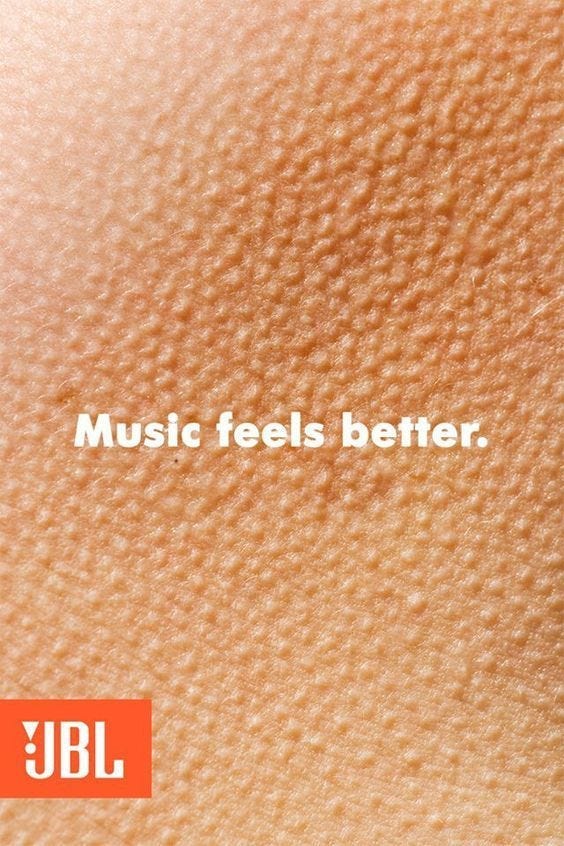
But first, I want to share this ad for a music brand that I recently saw making the rounds on LinkedIn. You can guess why. It gets your attention. It evokes something. It makes you feel.
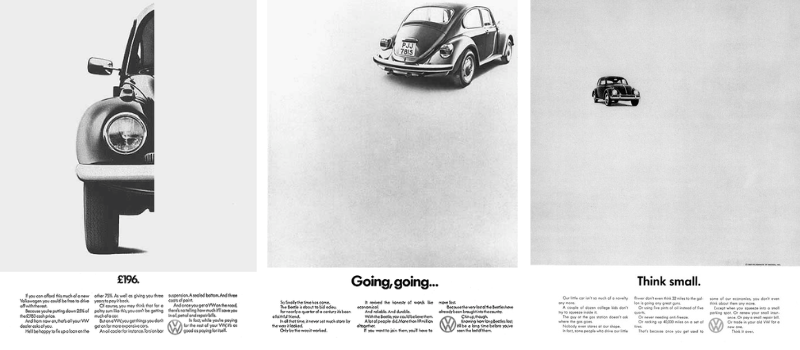
When I first saw it, it reminded me of the classic American print ads you used to see in newspapers. Here are a few of them I love from Volkswagen that ran in newspaper ads in the 1960s.
After a quick image search on Google, I saw this JBL ad wasn’t just making the rounds on LinkedIn. It was being posted on Twitter, Facebook, company blogs, and even my mom’s refrigerator. (Okay, the last one I put there.)
But not a single person cited their source. (Except my mom).
In fact, many of them have conflicting stories about the origin of the ad entirely. One person said that JBL produced this ad, but they didn’t share the context which left me curious. Was this a Facebook ad? In a newspaper? On a billboard? In a bathroom stall?
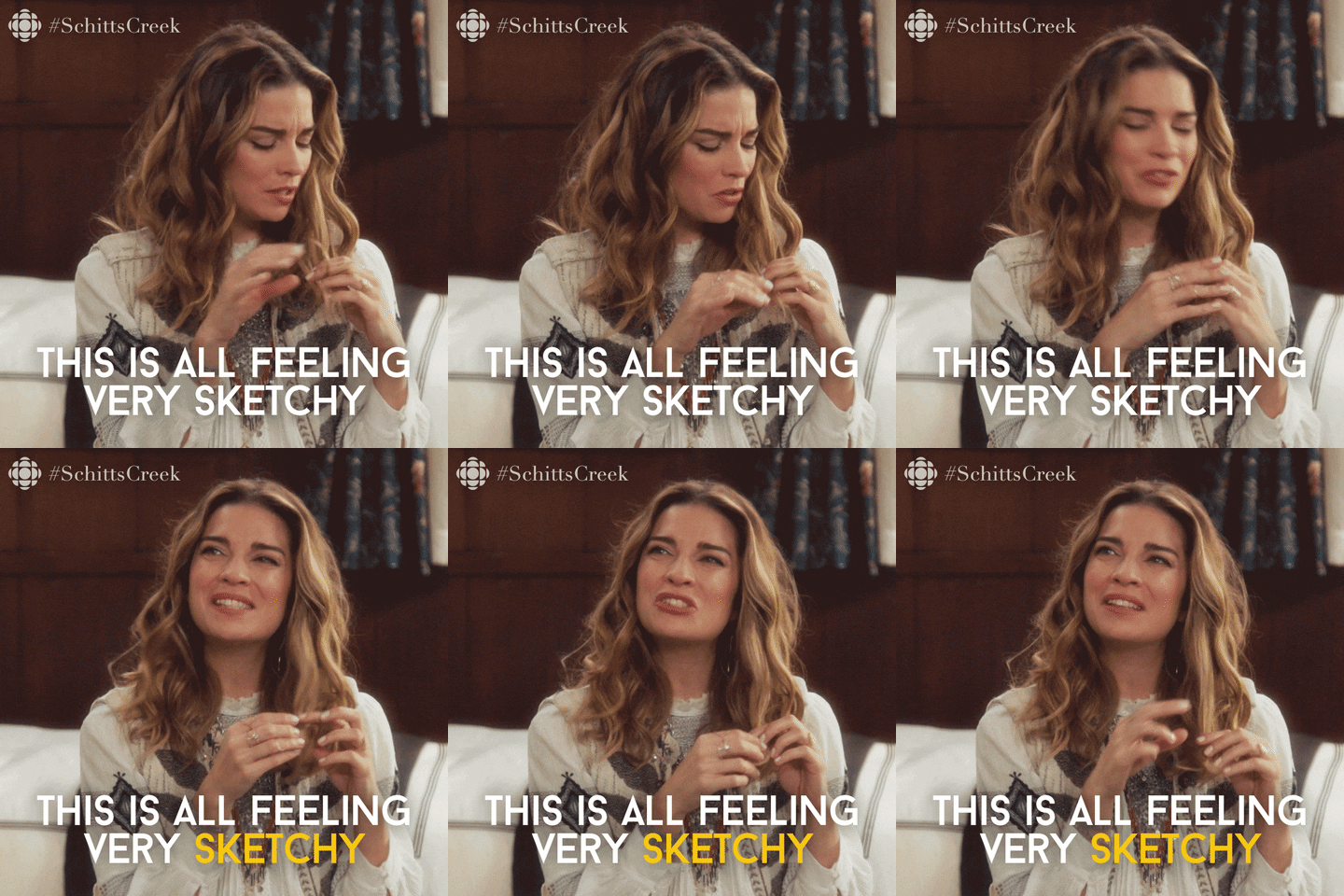
*Cue my plagiarism senses tingling*
Meanwhile, another company posted the ad on their Facebook account, and they made it seem like they created the ad as part of their portfolio. They used the example to promote their advertising services.
And all of this is plagiarism.
I probably don’t have to tell you that.
But there was another person sharing this ad who I want to talk about…
Let’s call him Tom.
Tom loved this ad, it caught his attention the same way it caught yours and mine. So he shared it with his close circle of friends — oops sorry I meant 13 thousand LinkedIn followers. He raved about what an impact it made and that the brand was a shining example we should all emulate.
Then below his long (and boring) tower of praise and emojis in the place of words, he wrote a not-so-subtle call to action promoting an upcoming event and, as any smart LinkedIn bro does, he shared his own personal brand.
“Enjoy 👀 this? Get a ticket to our BIG online event: [URL LINK] Follow Tom Tominson to read more totally fire ideas in your feed.🔥 ”—Some LinkedIn Guy
Now, maybe you see that as harmless. You know, he only shared a clever ad example, and he didn’t take credit for creating it.
All he really did was use it to promote his own personal brand and some upcoming marketing event for business people who have spare time on their hands to go to boring overpriced B2B conferences.
But it still feels icky, doesn’t it?
Because it is.
Because it’s still plagiarism.
If he loved it that much, why can’t he spend 5 minutes looking for the actual source and thanking the person who conceptualized it? Because he didn’t actually care about the creative person behind the thing he loved. He just cared about using their idea for his own benefit.
Luckily, some people do care.
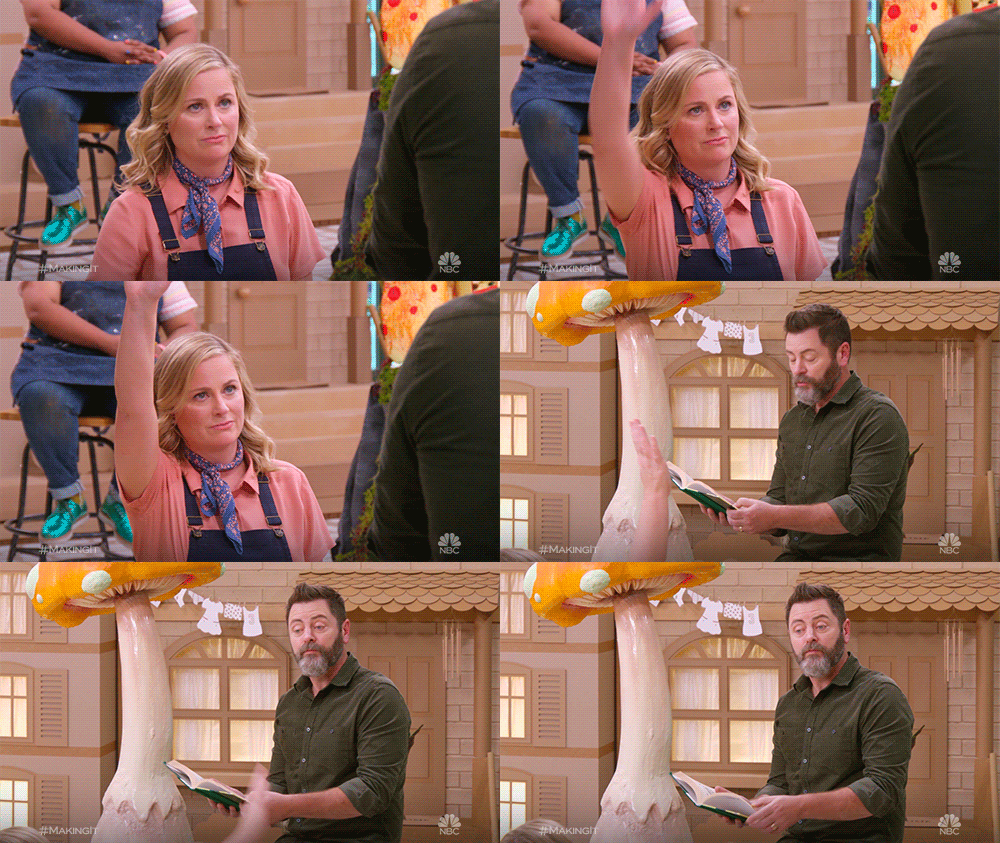
But before I get to that, let’s really dive into plagiarism for a second…
Plagiarism. noun. /ˈplājəˌriz(ə)m/
“Presenting work or ideas from another source as your own, with or without consent of the original author, by incorporating it into your work without full acknowledgement.” — Oxford Languages
While the definition of plagiarism often focuses on stealing ideas and misrepresenting them as their own, that’s not the only kind of plagiarism. In Academia, there are plenty more worth knowing about that I think many of us need to learn.
5 Types of Plagiarism
- Direct Plagiarism: Direct plagiarism is just when a person directly copies someone else’s words like our friend, Fidentinus I mentioned earlier. No quotation marks, no citations, nada.
- Mosaic Plagiarism: This is a more indirect kind, also called “patchwriting”. It happens when someone copies the structure of another person’s writing and ideas without citing them. However, since they are not copying their words verbatim, they assume it’s fine. (Note: It is not fine).
- Self–Plagiarism: This is probably the most common that everyone see as harmless and I’ve definitely stolen my own ideas from myself before, but if it’s not something published then you’re probably fine.
- Inaccurate Authorship: Another kind occurs when you misattribute an author or cite a fake author. This happened a lot to women scientists who weren’t respected, like Eunice Foote, whose husband received credit for her papers even though he wasn’t a scientist at all.
- Accidental Plagiarism: Lastly, we have the kind that inspired this whole article. This type happens when people forget to add sources, misquote someone, or unintentionally paraphrase something.
And honestly, it’s really easy to not plagiarize once you know all of this. All you have to do is cite your sources! Share your inspiration! Tag the person who inspired you to give them credit! Follow them on LinkedIn!
“If we’re free from the burden of trying to be completely original, we can stop trying to make something out of nothing, and we can embrace influence instead of running away from it.” — Austin Kleon in Steal Like An Artist
If they already wrote a brilliant idea, you don’t need to “rewrite” it and take credit. Sharing their words and how they inspired you is just as powerful. So, what about that ad?
Do we know who actually wrote it?
Can we ever find him in this massive pile of self-glorifying LinkedIn posts?
Does he exist outside all of these Tweets ghostwritten by ChatGPT?
It honestly didn’t even take me that long to find him. When I did my first reverse image search, I came across an old Pinterest post that led me to an Instagram post that actually tagged the original copywriter, Solomon Tsitsuashvili.
And the TRUTH will SHOCK you! *read in your best clickbait voice*
After reading the Instagram caption, I learned that it wasn’t a real ad after all. It was part of a creative challenge called “365 Days of Copy” by Georgia-based copywriter Solomon Tsitsuashvili, who created a print ad every day for a year in 2017.

But how do I know this is true and not just some random lie on social media?
Well, I went straight to the primary source.
I found the copywriter and I befriended him on LinkedIn. We connected when I told him that I really liked his music ad, and he confirmed that it was for fun as part of the project he did in 2017.
So, that’s it then.
We solved plagiarism, right?
We found the real copywriter and we gave him credit.
Well, kind of. For now. Until you realize there are millions of posts on social media every day plagiarizing someone else’s work, whether on purpose or by accident…
We actually haven’t solved it.
To fight plagiarism is to fight the red curry stain in your favourite Tupperware container. It’ll never go away. Humans have been doing it for thousands of years, we’re not going to stop because of one blog by little old me.
The only way is to call it out when we see it. Link the source in the comments and highlight the actual creative person behind the work. And to learn how to properly cite our sources obviously.
Today, I did what I could to give credit to one person who deserved it, and I hope more writer, marketers, and business bros on LinkedIn will learn a thing or two from this.
About the Author
Victoria Fraser is a freelance copywriter from Vancouver, Canada who works in the gaming, tech & music industry. She’s worked with global brands like the Copy Posse, Drumeo, and many more doing all things copywriting & content marketing (including making memes).
You can learn more at her website to work with her or support her work through Buy Me a Coffee!
 Victoria Fraser
Leave a comment